

The Town of Mariehamn: Community-Driven Approaches to Foster Inclusion
The Town of Mariehamn, the capital of the Åland Islands, is an autonomous region of Finland, with a population of nearly 11,900. It has been recognised as the Gold Award winner of the European Capitals of Inclusion and Diversity Award 2025 in the category for local authorities with fewer than 50,000 inhabitants. The Town of Mariehamn stands out for its comprehensive approach to fostering inclusion and diversity across various dimensions including gender, age, disability, religion, ethnic origin, and LGBTIQ+ identity.
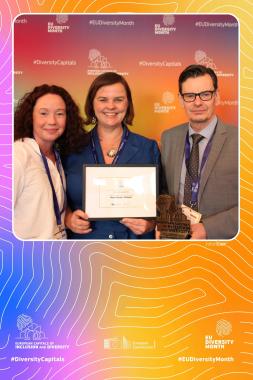
At the heart of the Town of Mariehamn’s strategy are inclusive initiatives such as, anonymous recruitment processes, diversity training, and inclusive onboarding programmes. The Town of Mariehamn’s commitment also extends to its younger persons through summer job programmes. In education more generally, the town has launched several initiatives to foster inclusion and dialogue. For instance, it provides specialised support for students with neuropsychiatric disabilities (NPF), annual anti-discrimination theme days, and Swedish language courses, alongside multicultural events. All these programmes underline the town’s dedication to creating an inclusive society.
A Town Striving for Social Inclusion and Collaboration
Social inclusion in the Town of Mariehamn is further strengthened through activities organised by its Integration Unit, such as language cafés and pop-up restaurants, which encourage cultural exchange. Strategic funding of these initiatives and partnerships with various actors have led to measurable improvements in safety and academic success as well as a reduction in discrimination rates.
The Town of Mariehamn actively engages its communities in urban planning and policymaking. This is achieved through advisory groups like the Youth and Elderly Councils, as well as dialogue meetings, focus groups, and regular surveys. Collaborating with organisations and diversity experts allows the town to enact policies reflecting its inhabitants’ real needs. Feedback loops also help facilitate continuous improvement.
Key partnerships with organisations such as, Regnbågsfyren (the Rainbow Association), the Red Cross, Åland Living, and various disability and migrant associations play a significant role in promoting inclusion and diversity. These groups are integral in the planning, implementation, and evaluation of policies. A collaborative relationship through which partners receive funding, access to facilities, and opportunities for capacity-building. Lastly, the town also engages in international collaboration through the Central Baltic Project, enhancing knowledge exchange and innovation.
Intersectionality as a Complex but Effective Strategy
Despite these advancements, challenges remain in tackling intersectional discrimination, building staff skills and competencies, and engaging marginalised communities. The Town of Mariehamn addresses these by embedding diversity into its strategies and routines, providing continuous training, and establishing inclusive teaching practices. Monitoring systems and feedback mechanisms also ensure that initiatives are repeatedly refined over time to reflect and address different needs and realities.
Receiving the European Capitals of Inclusion and Diversity Award is a validation of the Town of Mariehamn commitment to inclusion and diversity. Its strategic investments, commitment to intersectional approaches, and community-driven initiatives not only serve as a model for other municipalities but also inspire further innovation in creating inclusive societies.
The Town of Mariehamn’s advice to other cities aspiring to promote inclusion and diversity is clear: embed these principles into daily operations, actively engage affected communities, invest in staff training and infrastructure, collect and utilise data to guide improvements, and build long-term partnerships. The Town of Mariehamn is a prime example that inclusion must be systemic, intersectional, participatory, and continuously evaluated to effect meaningful and lasting change.